
Event
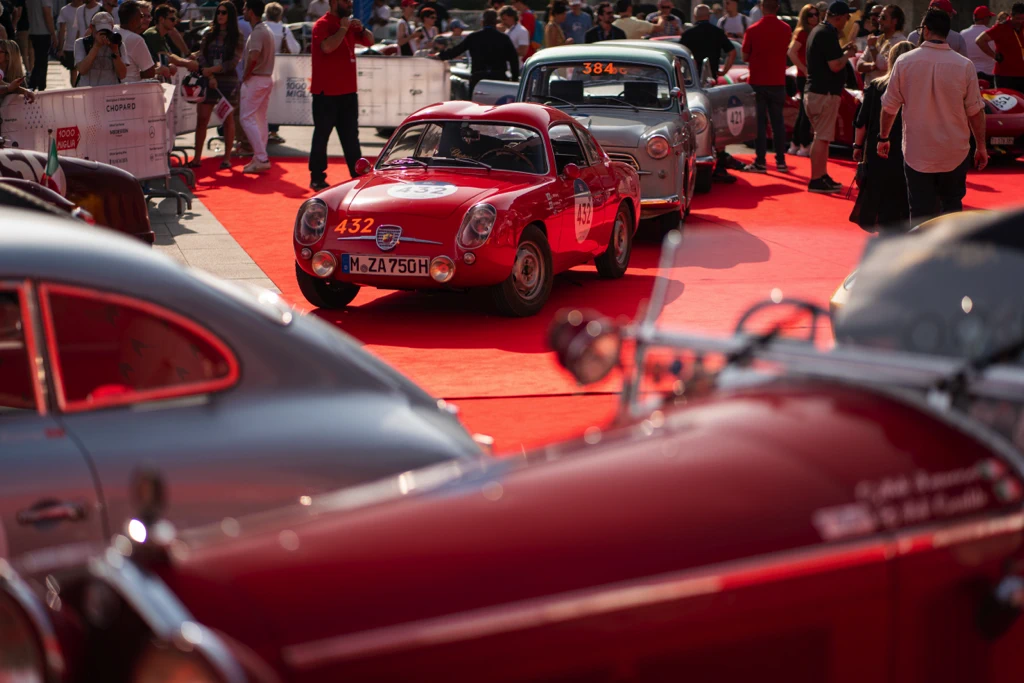
The original Mille Miglia ran as an open-road speed race from 1927 to 1957, covering roughly 1,600 kilometres between Brescia and Rome. Stirling Moss and Denis Jenkinson set the outright record in 1955 at an average of 157 km/h across public roads. The race ended after a fatal accident in 1957. Since 1977, the event has continued as a regularity rally, restricted to cars that competed in the original series – which means every machine on the route is a verified piece of motorsport history.
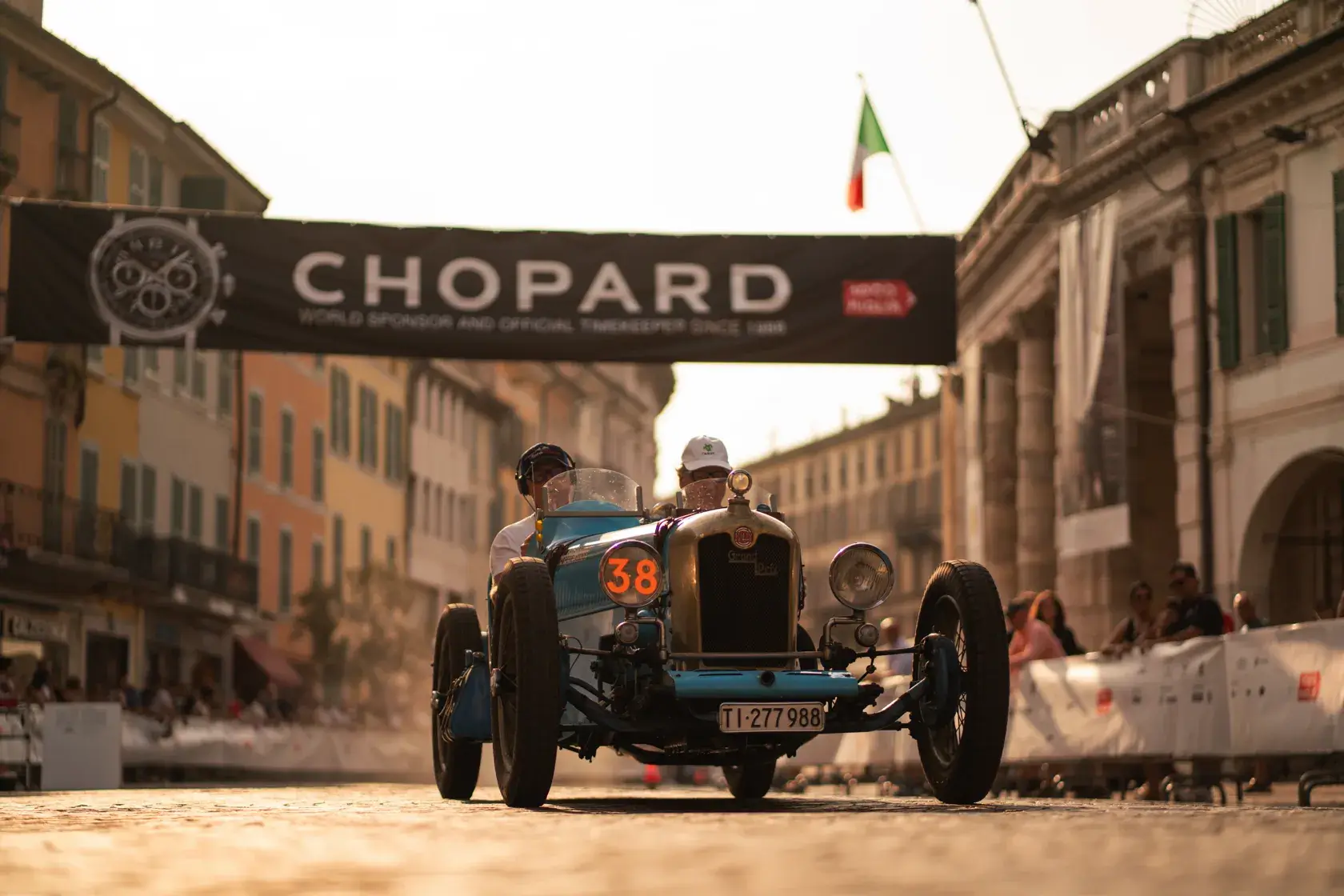
The 2026 edition follows the classic figure-eight route. Starting from Brescia, the convoy climbs through the Trompia Valley, skirts Lake Garda, and reaches Padua on day one. From there it runs westward through Ferrara, Modena and over the Abetone Pass to Montecatini Terme. Day three takes the field through Tuscany, with a stop in Siena's Piazza del Campo before descending to Rome – the traditional turning point. The return north passes through Assisi, the Furlo Gorge and Rimini before the final leg through Cervia and Mantua brings the field back to Viale Venezia in Brescia.
The rally crosses open roads throughout, which means no ticket is required to watch it. Every town on the route becomes a staging point: locals line the streets, restaurants fill with crews, and the sound of period engines moves through medieval centres at all hours. The density of the route through Emilia-Romagna and Tuscany means you can position yourself at several points along the same day's stage without covering much distance yourself.
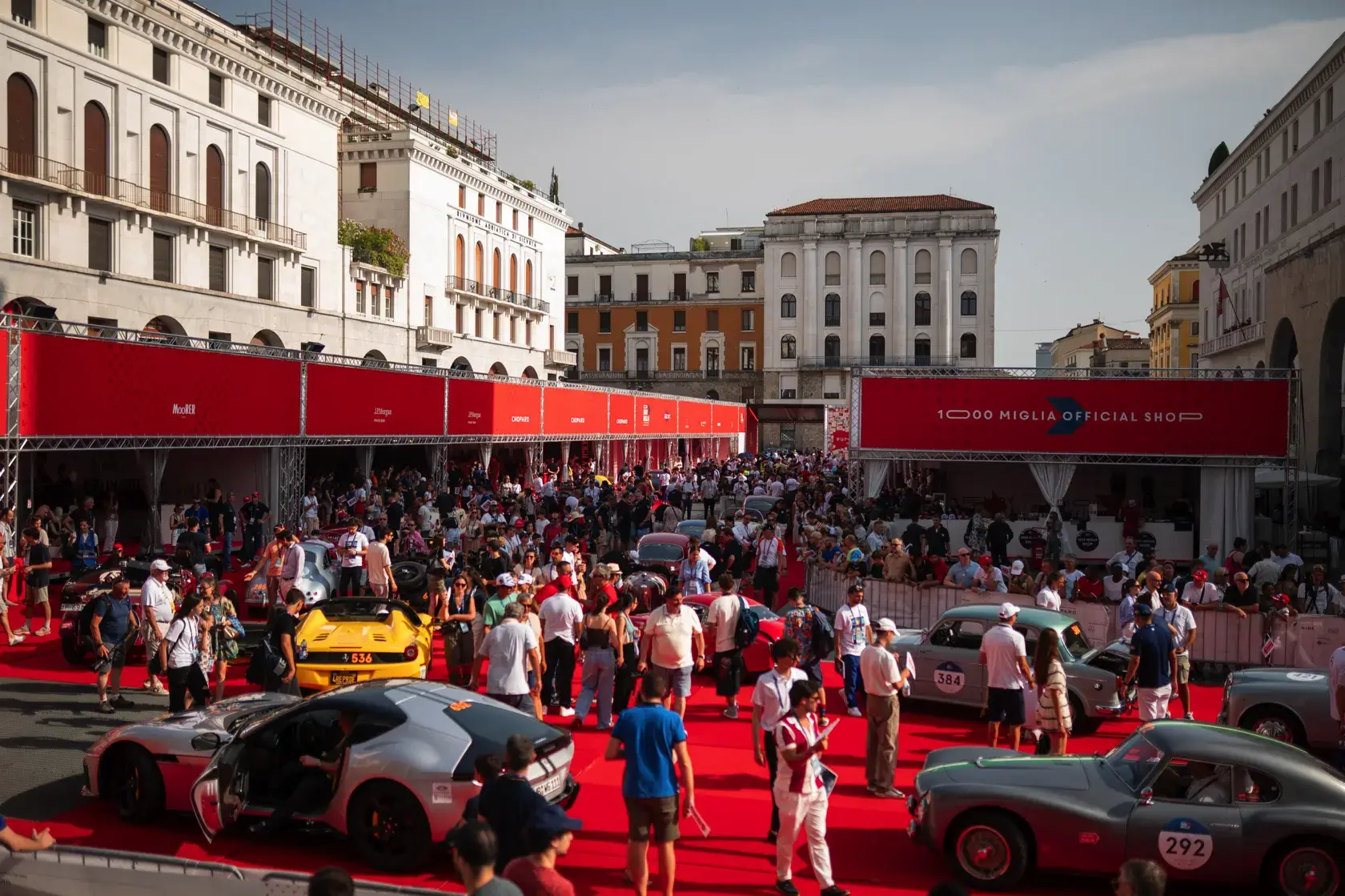
Brescia is the natural base, but the route through the Marche – particularly the Furlo Gorge on the return leg – is one of the less-visited sections and worth positioning around specifically. The gorge is narrow, the road follows the Candigliano river through limestone cliffs, and the cars come through at close range.


Organizer